
Sādhina Jātaka
Sādhina Jātaka
In the sun-drenched kingdom of Kalinga, ruled a king named Sādhina, whose reign was marked by a peculiar affliction. The king, despite possessing immense wealth and power, was plagued by an insatiable greed. His desire for more, for something greater, consumed him. He had amassed treasures beyond measure, yet his heart remained restless, forever yearning for what he did not have. This insatiable craving cast a dark shadow over his kingdom, as he often neglected the welfare of his subjects in his pursuit of wealth.
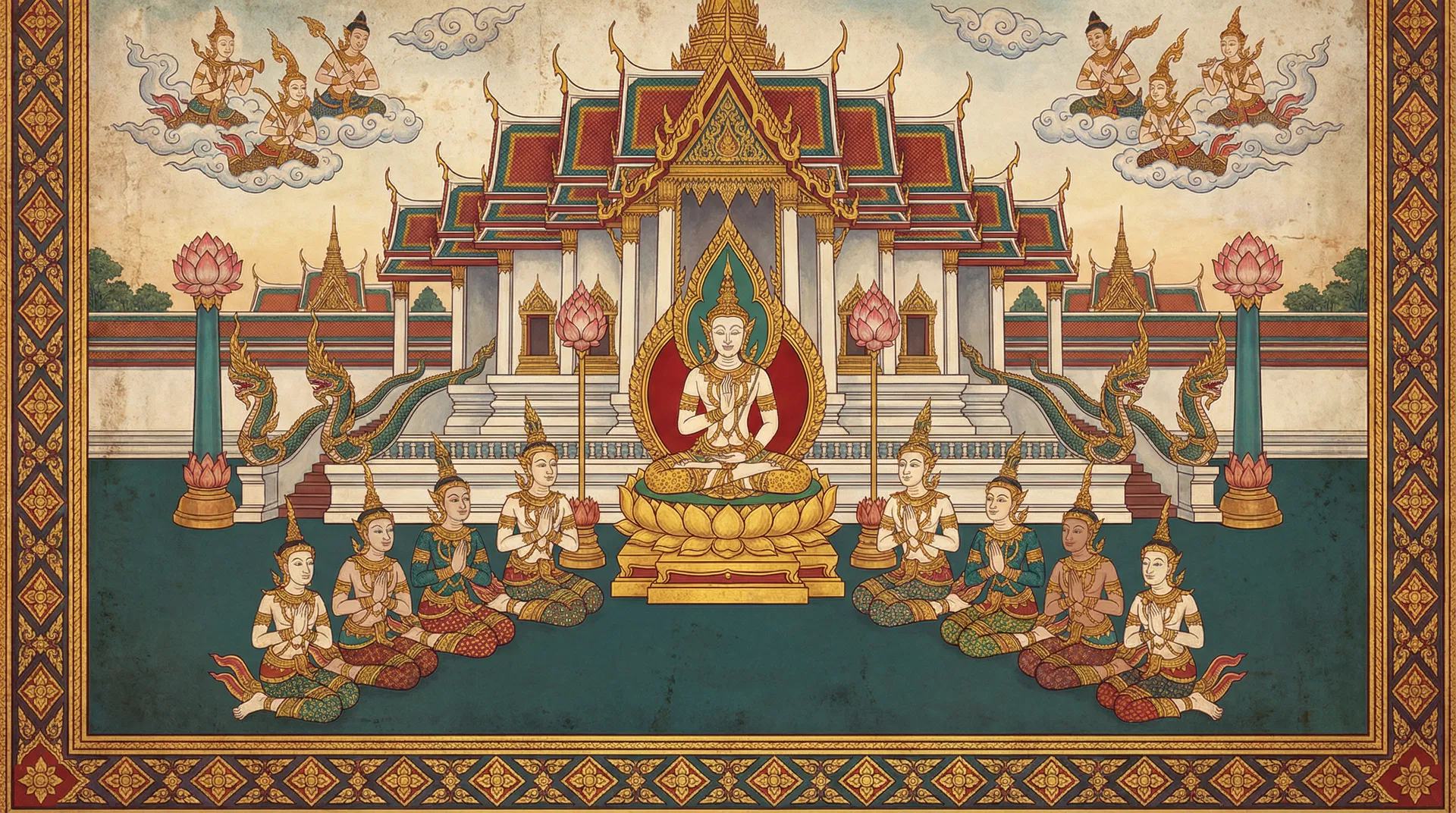
One day, while contemplating his vast riches, the king conceived a grand and audacious plan. He decided to build a magnificent golden palace, a structure so grand and opulent that it would be visible from miles around, a testament to his unparalleled wealth and glory. He summoned his wisest architects and ordered them to commence the construction immediately. The finest artisans were employed, and a mountain of gold was procured for the project. The kingdom buzzed with activity, as the palace began to take shape.
However, the king's greed knew no bounds. As the palace neared completion, he became obsessed with an idea: to cover the entire palace, from its foundation to its spires, with pure gold. He demanded that every surface, every wall, every beam be adorned with the precious metal. The cost was astronomical, and the resources of the kingdom were strained to their breaking point. Yet, the king's obsession did not waver.
The construction continued, draining the royal treasury and imposing heavy taxes on the already burdened populace. The people murmured amongst themselves, their grievances growing with each passing day. They saw their king consumed by a desire for vanity, while their own needs went unmet. The once-prosperous kingdom began to show signs of decline, its fields lying fallow, its markets dwindling.
Meanwhile, in the distant forests, lived a wise ascetic named Sādhina, who had renounced worldly possessions and lived a life of austerity. He possessed profound wisdom and a deep understanding of the human condition. He observed the goings-on in Kalinga from afar, his heart filled with concern for the king and his people.
One day, the ascetic decided to visit the king. He arrived at the palace, a humble figure amidst the grandeur. He was granted an audience with King Sādhina, who was proudly overseeing the final touches of his golden palace. The king, blinded by his obsession, barely noticed the ascetic's simple attire.
The ascetic, with a gentle voice, addressed the king. "Your Majesty," he began, "your palace is indeed a marvel. But tell me, have you considered the true value of this golden edifice?"
The king, taken aback by the question, responded with arrogance, "What value? It is a symbol of my power, my wealth, my glory!"
The ascetic smiled sadly. "Your Majesty, gold is but a transient metal. It can be stolen, it can be lost, it can even be melted down. True wealth, the wealth that endures, lies not in material possessions, but in the purity of one's heart and the well-being of one's people. What good is a golden palace if its foundations are built on the suffering of your subjects?"
The ascetic continued to speak, sharing profound teachings on the nature of greed, the impermanence of material wealth, and the importance of selfless service. He spoke of the true treasures – wisdom, compassion, and contentment – that no one could take away.
King Sādhina, initially dismissive, found himself captivated by the ascetic's words. The ascetic's wisdom pierced through the king's obsession, awakening a sense of shame and realization. He looked around at his golden palace, and for the first time, saw not glory, but the emptiness of his pursuit.
He realized the harm his greed had caused his kingdom and his people. He humbly bowed to the ascetic and confessed his folly. He ordered the construction to cease and, from that day forward, dedicated himself to ruling with wisdom and compassion. He used the remaining gold not for further adornment, but to alleviate the suffering of his people, to rebuild their livelihoods, and to establish institutions that would benefit them for generations to come. The golden palace, though incomplete, became a reminder of his transformation, a symbol of the lesson learned: that true glory lies in selfless service, not in selfish accumulation.
— In-Article Ad —
💡Moral of the Story
True wealth is not measured by material possessions, but by the well-being of one's people and the purity of one's heart. Greed leads to suffering and the decline of prosperity.
Perfection: Renunciation (Nekkhamma) and Wisdom (Panna)
— Ad Space (728x90) —
More Jataka Tales You May Enjoy
 427Navakanipāta
Sakuna Jataka
The Tale of the Virtuous Bird In the heart of a dense forest, where ancient trees reached for the sk...
💡 Compassion, selflessness, and the accumulation of spiritual merit have the power to overcome great adversity and benefit all beings. In times of crisis, unity and shared good deeds are far more powerful than anger and division.
 131Ekanipāta
Mugapakkha Jataka
The Tale of the Mute Prince In the ancient kingdom of Varanasi, nestled beside the sacred Ganges, li...
💡 True wisdom often lies not in speaking, but in knowing when and how to speak, especially when words are needed to uphold truth and compassion.
280TikanipātaSattubhatta Jataka
The Tale of the Generous Merchant and the Ungrateful Friend In the bustling port city of Bharukaccha...
💡 Generosity is a noble virtue, but it must be balanced with wisdom and discernment. True friendship requires reciprocity and responsibility; enabling ungratefulness is ultimately harmful.
 154Dukanipāta
Mātanga Jātaka
Mātanga JātakaIn the ancient city of Mithila, there lived a young woman of unparalleled beauty and g...
💡 True wisdom is accompanied by humility and compassion; superficial knowledge, when fueled by ego, leads to arrogance.
128EkanipātaKusa Jataka
Kusa JatakaIn the kingdom of Videha, ruled a wise and benevolent king named King Okkaka. His court w...
💡 Wisdom and courage, when combined with patience and self-sacrifice, can overcome even the most difficult and unjust circumstances, leading to truth and liberation.
160DukanipātaRohana Jataka
Rohana JatakaIn the ancient city of Ujjeni, a hub of trade and culture, lived a wealthy merchant nam...
💡 True wealth lies not in hoarding material possessions, but in sharing them to alleviate the suffering of others.
— Multiplex Ad —